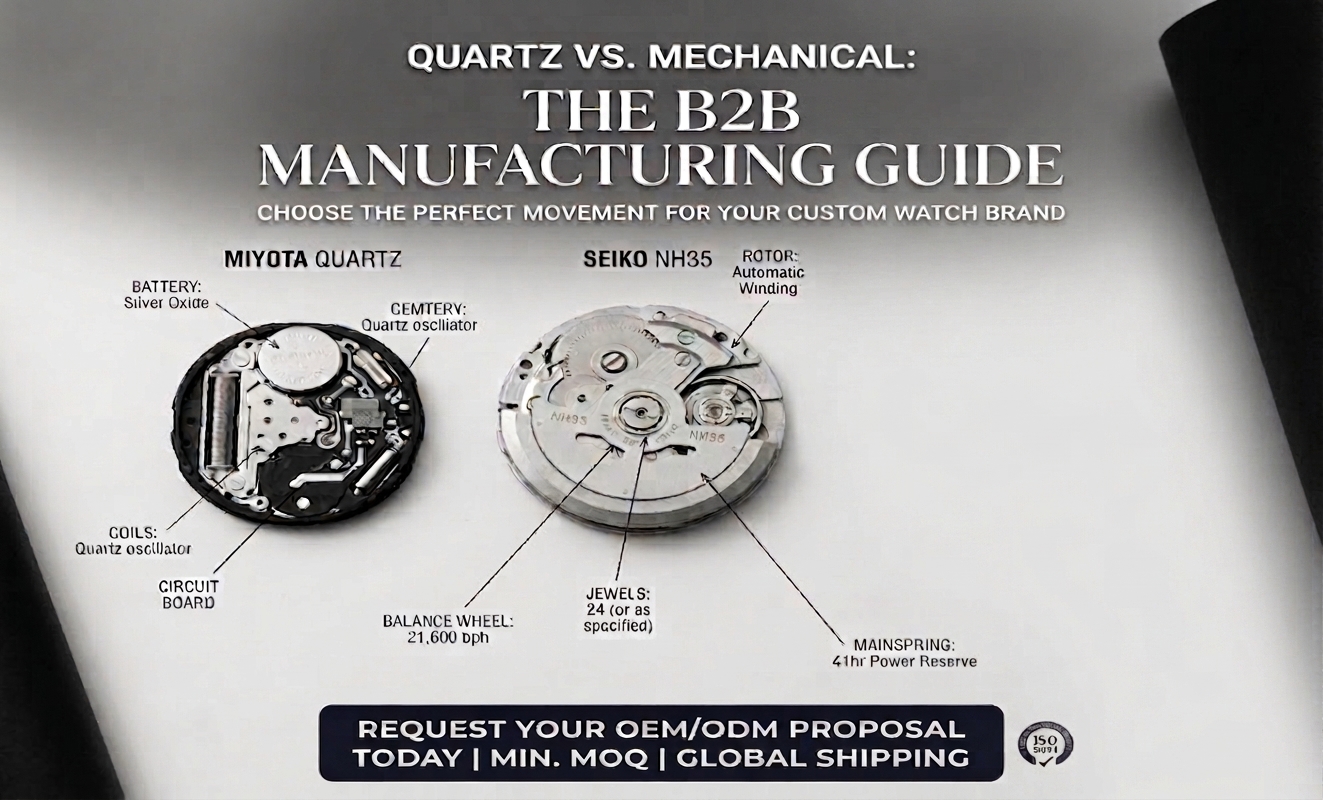
Choosing the right watch movement is one of the most critical product development decisions for custom watch brands, microbrands, and B2B buyers. Whether you are launching a minimalist fashion line or an entry-level luxury automatic series, the choice between quartz and mechanical movements directly impacts your Bill of Materials (BOM), production lead times, and brand positioning.
To help brand managers and procurement teams evaluate their options, we have compiled a head-to-head comparison based on real factory specs and manufacturing data.
Key Manufacturing & Cost Comparison
When evaluating movements for custom watch manufacturing, B2B buyers must weigh unit costs against long-term reliability and market expectations. Below is a structured comparison of popular quartz movements (e.g., Miyota 2035/1L45) versus automatic mechanical movements (e.g., Seiko NH35/Miyota 9015).
Why Choose Quartz Movements for OEM Production?
- Lower Financial Barrier: With lower unit costs and reduced Minimum Order Quantities (MOQ), quartz movements are ideal for promotional timepieces, fashion brands, and high-volume corporate gifts.
- Streamlined QC & Assembly: Quartz modules require fewer internal components, significantly reducing factory assembly error rates and warranty claim rates.
Why Choose Mechanical Movements for Private Label Brands?
- Higher Profit Margins: Automatic watches command higher retail price points and foster stronger consumer loyalty among microbrand collectors.
- Sustainable Brand Value: Mechanical watches appeal to buyers looking for craftsmanship, sweeping second hands, and transparent exhibition casebacks.
Engineering Verdict for B2B Buyers
If your target retail price is under $150 USD, starting with Japanese quartz movements (such as Miyota or Seiko EPSON) offers the safest return on investment. For private label brands aiming at the $250–$600 USD retail segment, standard-grade automatic movements like the Seiko NH35 or Miyota 8215 provide the perfect balance of reliability and marketing appeal.